
Jian Ware & Tenmoku
Jian ware and tenmoku
China called the bowl jianzhan. Japan called it tenmoku. And Japanese tenmoku includes bowls that never came from Jian at all.
Jianzhan is a place
Jianzhan means a bowl from Jian: the kiln at Jianyang in Fujian. The body is black and rich in iron, the glaze is thick, and the firing is hot. Yōhen, yuteki and nogime are all Jian techniques.
Tenmoku is a category
Tenmoku was coined in Japan, from Mount Tianmu in Zhejiang. No kiln has been found on the mountain. Zen monks returning from Song China brought black-glazed bowls with them, and the name covered the lot.
So tenmoku contains jianzhan, but is not limited to it. Leaf and taiha bowls from Jizhou are also tenmoku, in Japanese usage.
The two kilns
| Jian (Jianyang, Fujian) | Jizhou (Ji'an, Jiangxi) | |
|---|---|---|
| Body | Iron-rich, black | Low in iron, pale grey-white |
| Working life | Opened in the late Tang, flourished under the Song | Opened in the late Tang, peaked under the Southern Song |
| Signature wares | Yōhen, yuteki, nogime | Leaf, taiha, cut-paper appliqué |
| How decoration works | Crystals and flow in the glaze | Leaves and paper applied, ash fixing the pattern |
| Reception in Japan | Yōhen and yuteki ranked at the top; four National Treasures | Leaf sat outside the ranking; taiha is a National Treasure |
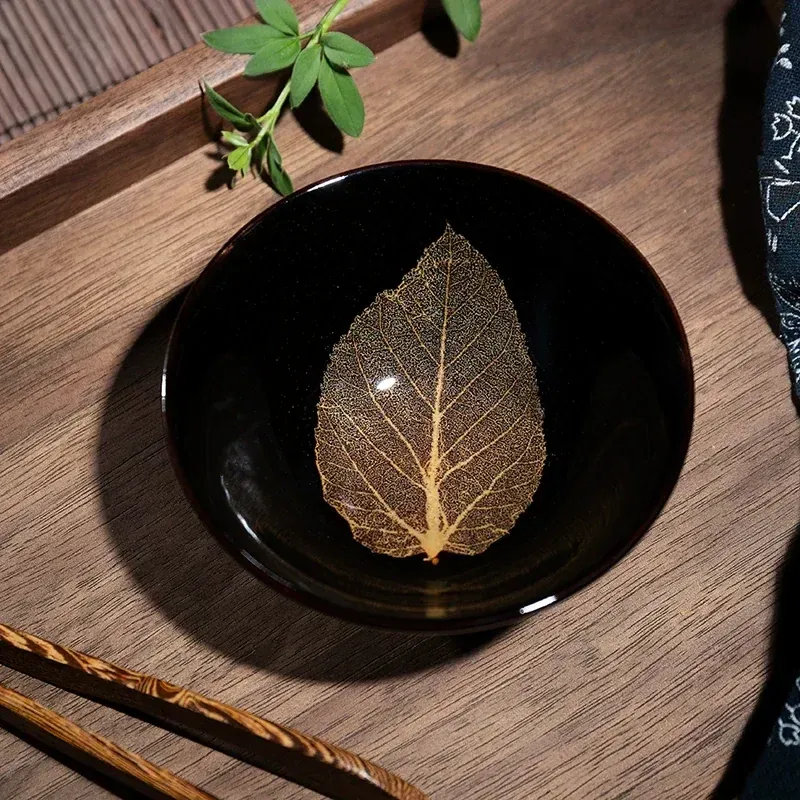
Leaf tenmoku does not appear in that ranking. That is not a verdict that it ranked low: the Kundai Kan Sōchōki was a scale for imported Chinese wares, and the idea of firing a real leaf onto a bowl sat outside what that scale described. Two leaf bowls — in the Tokyo National Museum and the Museum of Oriental Ceramics, Osaka — are designated Important Cultural Properties.
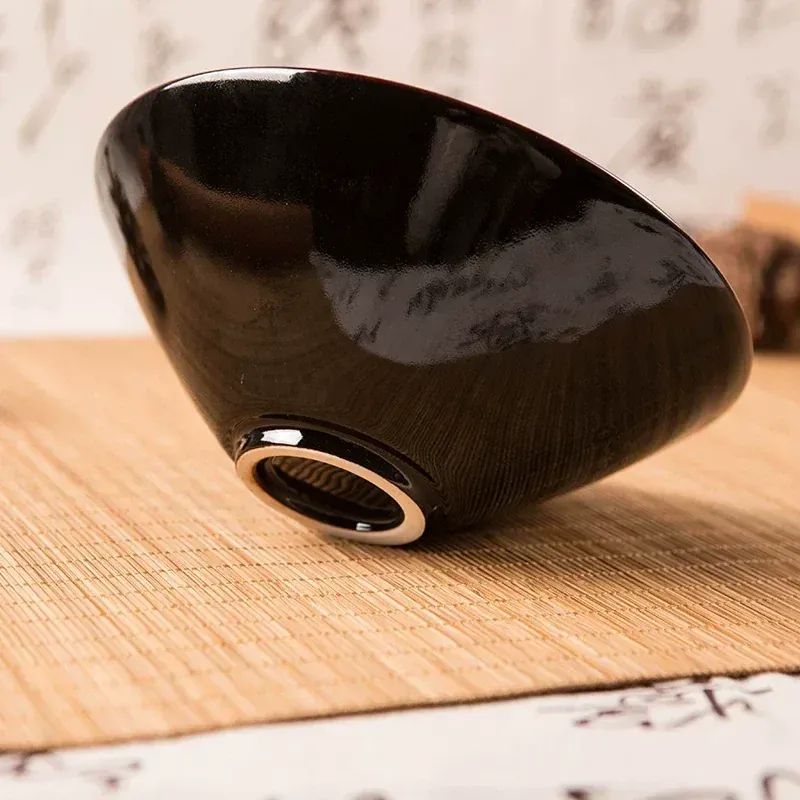
Jizhou's pale body is why a leaf reads so brightly against it. On Jian's black body the same decoration would not show. The difference in decoration begins in the clay.
Jian's body carries a lot of iron, and some of it enters the glaze during firing. Iron crystals form at the surface and become the spots of yōhen and yuteki. The body itself is part of the pattern. Jizhou's body holds little iron, so only the leaf or the ash laid on the glaze makes a pattern. Even under the same black glaze, the underside of a bowl usually tells you which kiln it came from.
Why the distinction is worth writing down
Search “tenmoku” and Jian material and Jizhou material arrive mixed together. People see a photograph of a yōhen bowl and go looking for a leaf bowl; others do the reverse. Different kilns mean different prices, different care, and a different way of searching.
We sell Jizhou. We do not sell Jian ware. What we can do is write about leaf tenmoku and taiha tenmoku in as much detail as we have.
Questions
Should I say jianzhan or tenmoku?
Jianzhan names the place of manufacture; tenmoku is the Japanese category. A Jizhou bowl is not jianzhan, so it is called tenmoku. Our listings use tenmoku throughout.
Were leaf bowls also made at the Jian kiln?
Leaf tenmoku is a Jizhou technique. Jian worked through crystals and flow in the glaze; applying a leaf is not a Jian practice. Keeping place and technique apart saves a lot of confusion.
How are the five National Treasure tenmoku divided between the kilns?
Three yōhen, one yuteki and one Jizhou taiha — four from Jian, one from Jizhou. The designation names and collections are listed under National Treasures.