Journal / 2026.11.20
A bowl 1.2 metres wide,
and fifty failed firings
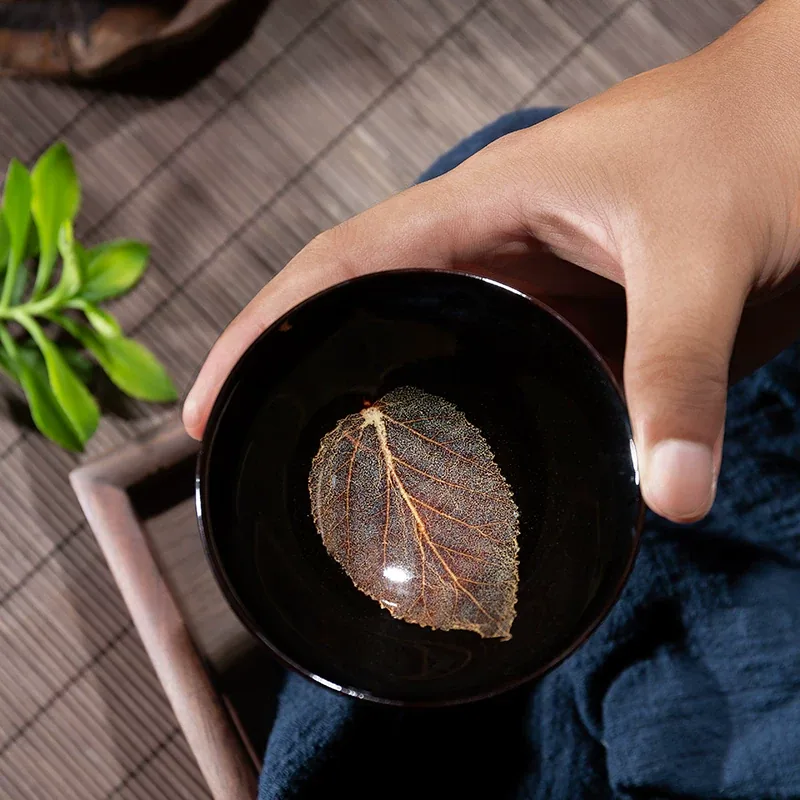
A leaf bowl was always an object for the hand. Twelve centimetres across, two hundred grams. Someone has fired one 1.2 metres wide.
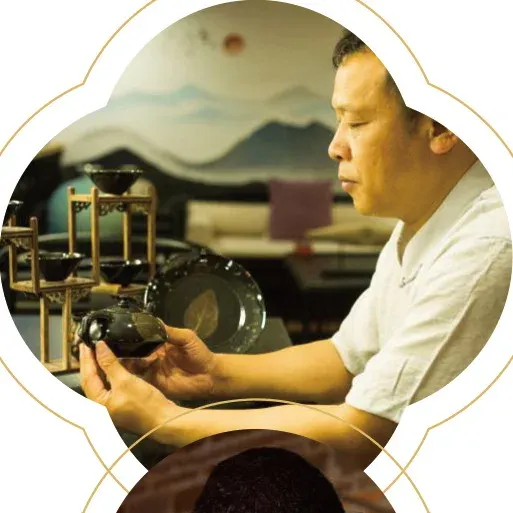
Yonghe, in Ji'an, Jiangxi. Luo Zhonghua's workshop stands a short walk from the Jizhou kiln site. On the day we visited, a black bowl 1.2 metres across was standing in the middle of the floor.
A hundred mulberry leaves are set into its surface. Their veins run in a hundred different directions; move around it and the leaves seem to drift across the black.
What breaks it is not the weight
With a piece this size, the difficulty is trimming, not firing. A large body grows heavier as it dries and loses any settled centre. A little too much pressure from the fingertips and it cracks; a little too little and it warps.
He laid futons across the workshop floor, so that a body dropped from the wheel would not break. At the time, that was the best anyone could do.
Trimming is followed by drying. On a thick body the surface dries first, and the difference from the inside opens cracks. It goes into a drying room for days, water drawn out slowly. Rush it and it splits; leave it too long and the form moves. At this size, the waiting is the yield.
The kiln was rebuilt too
A conventional kiln cannot deliver even heat to a body that size. He built a dedicated electric kiln, brought in a transformer, and logged the temperature continuously. More than fifty firings were thrown away before one came out.
Even a small bowl sees several degrees of difference across the kiln. At 1.2 metres the spread is wider. Glaze flow changes with temperature, so one side can come out right while the other runs. A bowl this size means resetting the conditions with every firing.
A kiln lives, a kiln dies. Even within one firing, some bowls keep their leaf and some lose it. With a piece that size, all the more so.
This bowl is not for sale
The large bowl is not merchandise. It is too big for a Japanese house, and awkward to use as a tea utensil. And yet it was necessary work: without it, nobody would know how far the kiln can go.
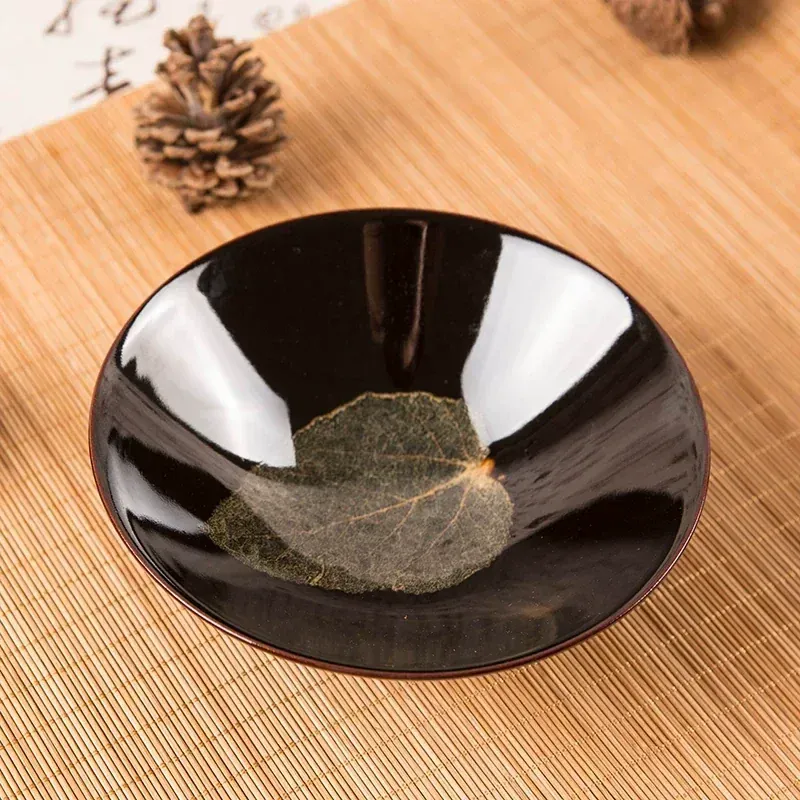
As we were leaving, Luo Zhonghua set a small standard bowl on the desk. Twelve centimetres across. One leaf, sunk in the bottom. Out of the same kiln, on the same day.
Questions
Is the 1.2-metre bowl for sale?
No. It has no place in a Japanese house and is awkward as a tea utensil. It was made to establish how far the kiln could go, not as merchandise.
Can the workshop be visited?
It is a private workshop and does not take visitors continuously. Visits for interviews are arranged case by case.
Where is leaf tenmoku made?
At Yonghe in Ji'an, Jiangxi, where the Jizhou kiln site is. Our bowls come directly from the potter there. The difference between the kilns is set out under Jian ware and tenmoku.
With thanks to Jiarui Industrial Co., Yonghe, Ji'an, Jiangxi.